Carbon Steel Stamping: A Practical Guide to Precision Metal Manufacturing
Carbon steel stamping is a popular manufacturing technique used to transform sheets or coils of carbon steel into useful metal components. It combines pressure, precision tooling, and controlled movement to create parts with specific shapes and dimensions. From automotive brackets to industrial hardware, stamped carbon steel components are used in many everyday and commercial products.
Manufacturers choose this process because it can deliver consistent results while supporting both simple and complicated designs. When the right material, tooling, and equipment are selected, carbon steel stamping can also provide excellent production efficiency. Understanding the process helps businesses make better decisions when developing metal components.
Understanding the Basics of Carbon Steel Stamping
Carbon steel stamping uses a stamping press and a custom-made die to reshape metal. The steel is placed between the working surfaces of the die. The press then applies force through a punch, causing the material to take the required form.
Some stamping processes cut the material, while others reshape it without completely separating it. A single component may require several operations before it reaches its final form.
The process is suitable for producing components with consistent dimensions. This makes it useful when hundreds, thousands, or millions of identical parts are required.
Main Stages of the Stamping Process
A successful carbon steel stamping project usually involves several important stages.
- Design: Engineers create the component design and determine its dimensions.
- Material selection: A suitable carbon steel grade and thickness are selected.
- Tool development: Dies and punches are designed for the required shape.
- Material preparation: Steel sheets or coils are cut and prepared for production.
- Stamping: The press applies controlled force to form the component.
- Inspection: Finished parts are checked against quality requirements.
- Finishing: Additional treatments are applied when necessary.
- Packaging: Completed parts are protected and prepared for delivery.
Each stage can affect the final quality of the component. Careful planning helps reduce defects and unnecessary production costs.
Why Carbon Steel Is Suitable for Stamping
Carbon steel offers several properties that make it useful for metal forming. Its mechanical characteristics can be adjusted through material selection and processing.
Low-carbon grades are especially popular for applications that require significant forming. They can usually be bent and shaped without excessive cracking.
Carbon steel is also widely available. This helps manufacturers maintain reliable material supply while keeping costs manageable.
Another important advantage is strength. Properly selected carbon steel can withstand mechanical loads and demanding working conditions. This makes it suitable for structural and functional components.
Common Designs Produced Through Stamping
Carbon steel stamping can create many different component designs. The possibilities depend on the available equipment, tooling, material thickness, and part geometry.
Examples include:
- Flat brackets
- Mounting plates
- Clips
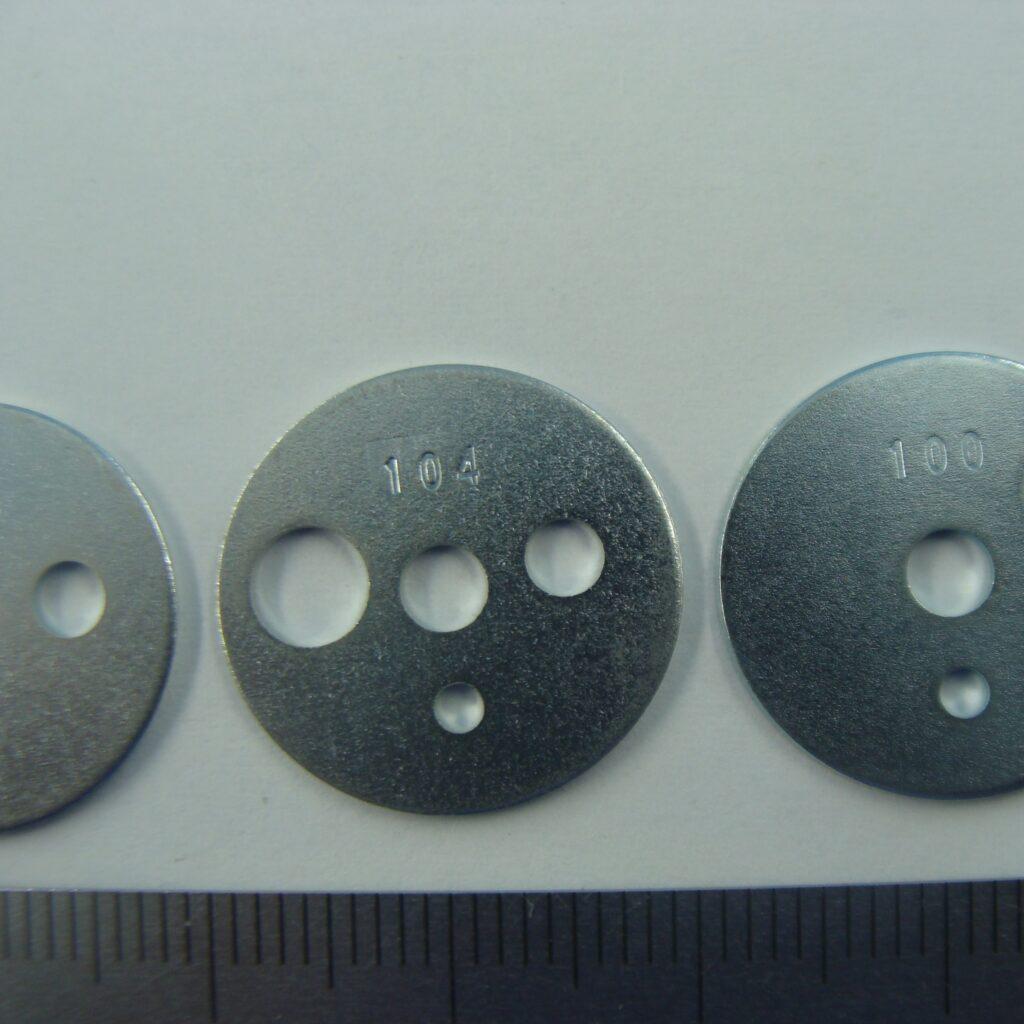
- Washers
- Covers
- Supports
- Panels
- Channels
- Enclosures
- Structural connectors
Small components can be manufactured using precision stamping equipment, while larger parts may require specialized presses and tooling.
Progressive Stamping and Its Advantages
Progressive stamping is an efficient option for producing large quantities of small or medium-sized components. In this process, a continuous strip of carbon steel moves through a die containing multiple stations.
Each station performs a specific task. One station may create a hole, another may bend an edge, and another may complete the final shape.
This method reduces the need for separate machines and manual transfers between operations. It can therefore improve production speed and consistency.
Progressive stamping is particularly useful when the same component needs to be manufactured in very large quantities.
Deep Drawing Carbon Steel Components
Some products require more than simple cutting or bending. Deep drawing can transform a flat carbon steel blank into a deeper shape.
During deep drawing, the material flows into a die while a punch pushes it downward. This can create cup-like or enclosed shapes.
The process requires careful control because excessive force can cause tearing or wrinkles. Material properties, lubrication, die design, and forming depth all influence the final result.
Deep-drawn carbon steel components can be found in various industrial and mechanical applications.
Factors That Affect Stamping Accuracy
Accuracy is important when producing components that must fit with other parts. Several factors can influence dimensional results.
Material thickness is one major factor. Variations in thickness can affect forming behavior and final dimensions.
Tooling accuracy is equally important. A poorly designed or worn die may create inconsistent parts.
Press settings also matter. Force, speed, stroke length, and alignment should be properly controlled.
Material springback can create another challenge. After forming pressure is removed, carbon steel may partially return toward its original shape. Engineers account for this behavior when designing the tooling.
Managing Material Waste
Efficient material usage can have a significant impact on manufacturing costs. Stamping layouts should be designed to use as much of the sheet or coil as possible.
Engineers often use nesting strategies to arrange components efficiently. The spacing between parts should be carefully considered while still allowing reliable cutting.
Reducing scrap can lower material expenses and improve overall production efficiency. Some scrap material can also be collected and recycled.
Role of Automation in Carbon Steel Stamping
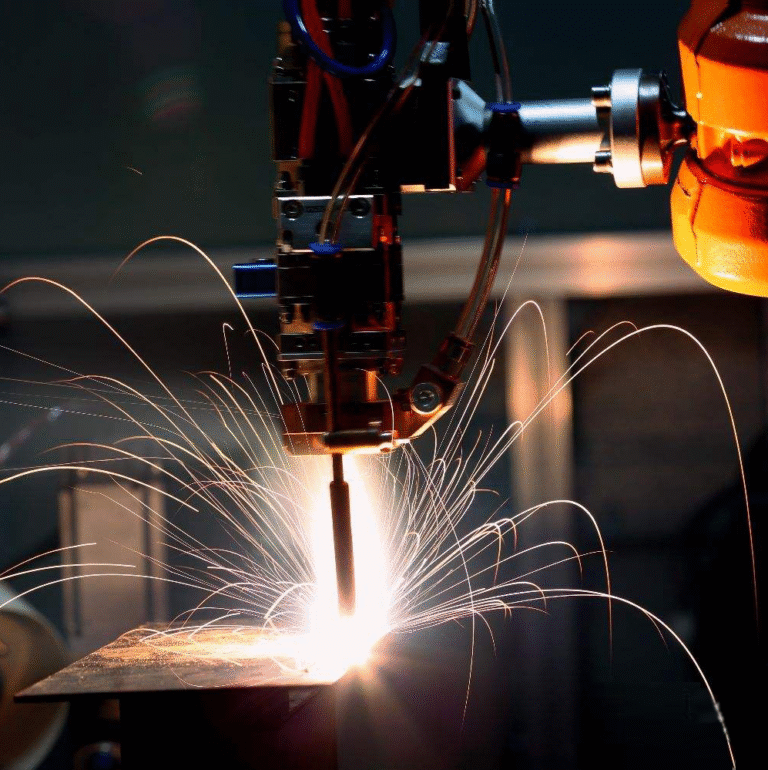
Automation has changed modern metal stamping operations. Automated feeders can move steel strips into presses at controlled intervals. Sensors can monitor production and identify potential problems.
Robotic systems can also transfer components between machines or perform additional operations.
Automation can improve production consistency and reduce repetitive manual work. It is especially valuable for high-volume manufacturing environments.
However, automation should be selected according to production requirements. For smaller projects, a simpler setup may be more economical.
Safety Considerations During Stamping
Stamping presses generate significant mechanical force, so workplace safety is essential. Operators should receive proper training and follow established machine procedures.
Modern equipment may include guards, sensors, emergency stops, and other protective systems. These features help reduce the risk of accidental contact with moving machinery.
Routine inspections are also important. Damaged tooling, loose components, or unusual machine behavior should be addressed before continuing production.
A strong safety program protects workers while also supporting reliable manufacturing operations.
Environmental Considerations
Manufacturers are increasingly focused on reducing waste and improving resource efficiency. Carbon steel stamping can support these goals through optimized material layouts and recycling programs.
Metal scrap generated during production can often be collected and recycled. Efficient tooling can also reduce unnecessary material consumption.
Modern presses may be designed to improve energy efficiency. Regular equipment maintenance can further help prevent excessive energy use and production waste.
Choosing efficient processes can benefit both manufacturing costs and environmental performance.
How to Reduce Carbon Steel Stamping Costs
Several strategies can help control stamping expenses. The first is choosing a suitable material grade. Using unnecessarily expensive steel can increase costs without providing meaningful benefits.
Tooling design also deserves careful attention. A well-designed die can support longer production runs and reduce maintenance requirements.
For large orders, progressive stamping can provide lower per-unit costs. Optimizing material layouts can further reduce scrap.
Businesses should also consider the total production process rather than focusing only on the initial stamping price. Quality, tooling life, maintenance, finishing, and delivery can all affect the final cost.
What to Look for in a Stamping Partner
A reliable carbon steel stamping partner should have suitable presses, experienced engineers, quality control procedures, and strong tooling capabilities.
Ask potential manufacturers about their experience with similar components. It is also useful to discuss production volume, tolerances, material requirements, finishing, and expected delivery times.
A supplier that provides design-for-manufacturing support can be especially valuable. Their engineers may identify ways to simplify the component and reduce production difficulties before tooling begins.
Conclusion
Carbon steel stamping provides manufacturers with an effective way to produce accurate and durable metal components. The process can support simple shapes, complex forms, high-volume production, and specialized industrial requirements.
Material selection, tooling design, press settings, quality inspection, and finishing all influence the final result. When these factors are carefully managed, carbon steel stamping can deliver dependable components while maintaining efficient production.
For companies seeking a practical metal manufacturing solution, carbon steel stamping remains a valuable choice. Its combination of strength, versatility, scalability, and cost efficiency continues to make it important across modern manufacturing industries.