Sauce Bottling Machine: A Complete Guide for Efficient Sauce Packaging
A sauce bottling machine is an important piece of equipment for companies that produce and package sauces. From ketchup and mayonnaise to chili sauce, barbecue sauce, tomato sauce, and salad dressings, manufacturers need a reliable way to fill bottles accurately and efficiently. Manual bottling can be slow, messy, and inconsistent. A modern sauce bottling machine helps businesses improve production speed while maintaining product quality.
Choosing the right machine depends on several factors. These include the type of sauce, bottle size, production capacity, filling accuracy, and level of automation. Small businesses may need a semi-automatic system, while large factories often require a fully automatic bottling line. Understanding the available options can help manufacturers make a smarter investment.
What Is a Sauce Bottling Machine?
A sauce bottling machine is designed to fill sauce products into bottles, jars, or other containers. It controls the amount of product placed into each container and helps create a clean and consistent packaging process.
Sauces come in many different textures. Some are thin and liquid, while others are thick and contain particles such as herbs, spices, or vegetable pieces. Because of these differences, filling equipment must be selected according to the product’s viscosity and ingredients.
Many modern machines can handle several packaging sizes with simple adjustments. Depending on the production requirements, a bottling system may include filling, capping, labeling, sealing, and conveyor equipment.
How Does a Sauce Bottling Machine Work?
The basic operation of a sauce bottling machine is simple. Empty bottles enter the machine through a conveyor or manual loading system. The bottles are positioned under filling nozzles, and the machine dispenses a controlled amount of sauce into each container.
After filling, the bottles move to the next stage of production. This may include:
- Capping the bottles
- Applying seals
- Adding labels
- Printing batch or date information
- Inspecting the finished packages
- Packing bottles into cartons
The level of automation can vary. Semi-automatic equipment may require an operator to place and remove bottles. Fully automatic systems can perform the entire process continuously with minimal manual handling.
Types of Sauce Bottling Machines
There are several types of sauce filling and bottling machines available. Each type is suitable for specific production needs.
Piston Filling Machines
Piston fillers are commonly used for thick and viscous sauces. They use a piston and cylinder system to measure and dispense a precise volume of product.
This type of machine is suitable for products such as:
- Ketchup
- Mayonnaise
- Mustard
- Barbecue sauce
- Chili sauce
- Thick salad dressings
Piston filling technology offers good accuracy and can handle products with different levels of thickness.
Pump Filling Machines
Pump filling machines use different types of pumps to move sauce from a storage tank into bottles. They can be useful for medium to high-viscosity products.
Depending on the design, these machines may use gear pumps, lobe pumps, or other pumping systems. Pump fillers can provide consistent filling and are often suitable for automated production lines.
Gravity Filling Machines
Gravity fillers are generally used for thin and free-flowing sauces. The product flows from a tank into the bottle through the force of gravity.
These machines may not be ideal for very thick products. However, they can work well for liquid sauces, vinegar-based products, and other low-viscosity food products.
Vacuum Filling Machines
Vacuum filling systems can be used for certain liquid products and containers. They help control the filling level and can provide a uniform appearance when bottles have small differences in internal volume.
The best option depends on the sauce formula and the packaging requirements.
Benefits of Using a Sauce Bottling Machine
Investing in a sauce bottling machine can provide many benefits for food manufacturers. One of the main advantages is increased production efficiency. A machine can fill bottles much faster than a manual process.
Another important benefit is consistency. Each bottle can receive a similar amount of product, which helps reduce waste and improves customer satisfaction.
Other benefits include:
- Higher production speed
- Better filling accuracy
- Reduced product waste
- Cleaner operations
- Lower labor requirements
- Improved packaging consistency
- Easier production scaling
- Better hygiene control
For growing sauce brands, automation can make it easier to meet increasing customer demand.
Choosing the Right Filling Technology for Your Sauce
Not every sauce has the same physical properties. Before buying a sauce bottling machine, manufacturers should carefully study their product.
Viscosity is one of the most important factors. Thick sauces usually require a different filling method than thin liquids. Products containing particles may also need specially designed pumps, larger nozzles, or gentle handling systems.
The temperature of the sauce can also affect equipment selection. Some sauces are filled while hot, while others are processed and packaged at lower temperatures.
Manufacturers should consider:
- Sauce viscosity
- Product temperature
- Particle size
- Filling volume
- Bottle material
- Bottle shape
- Required production speed
- Cleaning requirements
Working with an experienced equipment supplier can help ensure that the machine is compatible with the product.
Semi-Automatic vs. Fully Automatic Machines
A semi-automatic sauce bottling machine can be a practical choice for startups and small producers. These machines generally require more operator involvement but have lower initial costs.
An operator may place bottles under the filling nozzle and activate the filling cycle. This type of equipment can be useful for businesses with smaller production volumes.
Fully automatic machines are designed for larger operations. Bottles move automatically through the system, and filling cycles are controlled by sensors and programmable settings.
Fully automatic systems can offer higher output and reduced labor needs. However, they usually require a larger investment and more production space.
The best choice depends on current production needs and future growth plans.
Important Features to Look For
When selecting a sauce bottling machine, several features should be considered. Accuracy is essential because overfilling increases product costs, while underfilling can create customer complaints.
The machine should also be easy to clean. Food production equipment must support proper sanitation practices. Stainless steel construction is commonly preferred because it is durable and suitable for food processing environments.
Useful features may include:
- Adjustable filling volumes
- Multiple filling heads
- No-drip filling nozzles
- Touchscreen controls
- Bottle detection sensors
- Quick-change parts
- Automatic cleaning options
- Variable conveyor speeds
A flexible machine can also allow manufacturers to introduce new bottle sizes or products without purchasing an entirely new system.
Integrating a Complete Sauce Bottling Line
A sauce bottling machine can operate as a standalone unit, but many manufacturers choose to build a complete packaging line. This creates a smoother and more efficient production process.
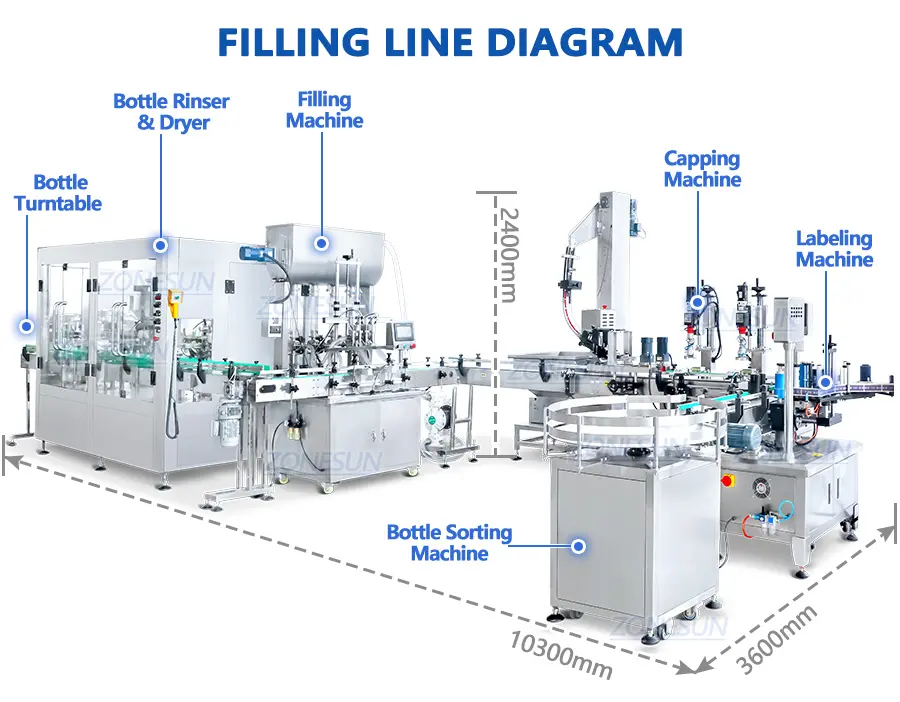
A typical sauce bottling line may include a bottle rinsing machine, filling machine, capping machine, sealing equipment, labeling machine, coding system, and conveyor.
Integration helps bottles move continuously from one stage to another. This can reduce handling time and improve overall productivity.
Before designing a complete line, manufacturers should calculate the required bottles per minute. Every machine in the line should have a compatible production capacity. If one machine operates much slower than the others, it can create a production bottleneck.
Cleaning and Maintenance Requirements
Regular cleaning and maintenance are essential for any food packaging equipment. Sauce residue can build up inside tanks, pipes, pumps, and filling nozzles. Proper cleaning helps maintain product quality and supports safe production.
Operators should follow the equipment manufacturer’s cleaning instructions. Depending on the system, cleaning may involve manual washing or a cleaning-in-place process.
Regular maintenance should include checking:
- Seals and gaskets
- Pumps
- Filling nozzles
- Sensors
- Conveyor components
- Electrical connections
- Moving parts
Preventive maintenance can reduce unexpected downtime and extend the working life of the machine.
Improving Production Efficiency
A well-designed sauce bottling operation does more than simply fill bottles quickly. Efficiency also depends on reducing waste, minimizing downtime, and maintaining consistent product flow.
Manufacturers can improve performance by training operators, maintaining equipment, monitoring filling accuracy, and keeping spare parts available.
Production data can also help identify problems. For example, businesses can track the number of bottles produced, product waste, machine downtime, and rejected packages.
Regular performance reviews can reveal areas where the bottling process needs improvement.
The Future of Sauce Bottling Equipment
Automation is becoming increasingly important in food packaging. Modern machines can include programmable controls, sensors, automatic adjustments, and data monitoring features.
Future sauce bottling systems may offer greater flexibility and easier integration with smart factory technology. Manufacturers will continue looking for equipment that reduces waste, improves hygiene, and supports faster product changeovers.
Sustainability is also becoming an important consideration. Efficient machines can help reduce product loss and unnecessary packaging waste.
As sauce brands expand, flexible and reliable equipment will remain essential for maintaining efficient production.
Conclusion
A sauce bottling machine is a valuable investment for businesses that want to package sauces accurately, safely, and efficiently. The right machine can increase production capacity, improve consistency, reduce waste, and support business growth.
Before making a purchase, manufacturers should evaluate their sauce type, production volume, container design, filling accuracy, and automation requirements. Thick sauces may require piston or pump filling technology, while thinner products may work with other filling methods.
Whether you operate a small food business or a large manufacturing facility, selecting the right sauce bottling machine can make the packaging process faster and more reliable. By choosing suitable equipment, maintaining it properly, and designing an efficient production line, sauce manufacturers can improve productivity and deliver high-quality products to their customers.