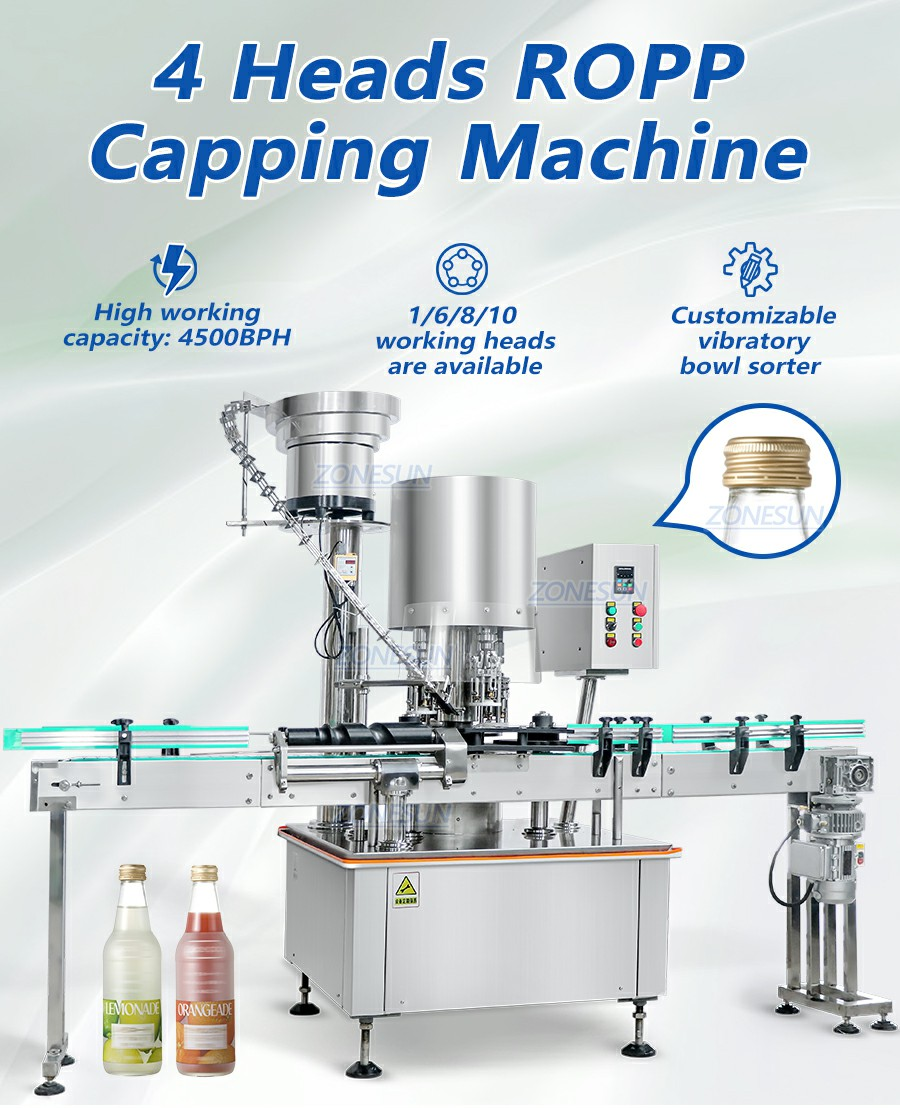
ROPP Capping Machine: A Complete Guide for Reliable Bottle Sealing
A ROPP capping machine is an important piece of equipment used in the packaging industry. ROPP stands for Roll-On Pilfer-Proof. This machine is designed to apply and seal aluminum ROPP caps onto bottles. These caps are commonly used for beverages, pharmaceuticals, edible oils, chemicals, cosmetics, and many other liquid products.
A properly sealed bottle helps protect the product from leakage, contamination, and unwanted opening. It also gives the package a professional appearance. Modern ROPP capping machine systems can handle different bottle sizes and production speeds. Businesses can choose from manual, semi-automatic, and fully automatic models based on their production needs.
In this guide, we will explain how these machines work, their benefits, applications, types, and important factors to consider before buying one.
What Is a ROPP Capping Machine?
A ROPP capping machine is specialized packaging equipment that applies aluminum caps to bottles and forms threads directly onto the cap. The cap is placed over the bottle opening and then shaped using rotating rollers.
The rollers press and form the aluminum cap around the neck of the bottle. This process creates a secure closure that matches the bottle’s thread design. Many ROPP caps also include a tamper-evident band. When the bottle is opened for the first time, this band breaks or separates, showing that the product has been accessed.
These machines are widely used because they provide strong and consistent sealing. They can also improve packaging speed and reduce the need for manual labor.
How Does a ROPP Capping Machine Work?
The working process of a ROPP capping machine is simple but highly precise. First, filled bottles move into the capping area. The machine places an aluminum ROPP cap on the top of each bottle.
The bottle is then held firmly in position. A capping head moves over the cap and begins rotating. Special rollers apply pressure to different areas of the aluminum cap.
One set of rollers forms the threads around the bottle neck. Another set creates the tamper-evident seal or skirt. The result is a tightly sealed bottle with a clean and professional finish.
Automatic machines can complete this process continuously. This makes them suitable for large production lines where hundreds or thousands of bottles need to be sealed every hour.
Main Components of a ROPP Capping Machine
A typical ROPP capping machine contains several important parts. Each component plays a role in creating a reliable seal.
The bottle conveyor moves containers through the production line. A bottle positioning system keeps each bottle correctly aligned. The cap feeding system supplies caps to the machine, while the capping head performs the sealing process.
The capping rollers are among the most important components. They shape the aluminum cap around the bottle neck. Adjustable guides allow the machine to handle different bottle heights and diameters.
Modern equipment may also include sensors, PLC controls, touch-screen panels, and safety guards. These features help operators control the machine and maintain consistent production quality.
Types of ROPP Capping Machines
Different types of ROPP capping machines are available for different production requirements. Choosing the right type depends on output, budget, bottle design, and automation needs.
Manual machines are suitable for small businesses and laboratory applications. They require more operator involvement but are usually affordable.
Semi-automatic machines offer a balance between manual operation and automation. An operator may place the bottle or cap, while the machine performs the capping process.
Automatic ROPP capping machine systems are designed for larger production lines. Bottles move through the machine automatically, and the system can perform cap placement and sealing with minimal human involvement.
High-speed rotary capping machines are also available for major manufacturers that need continuous and high-volume production.
Advantages of Using a ROPP Capping Machine
One major advantage of a ROPP capping machine is its ability to create a secure and consistent seal. Proper capping helps prevent product leakage during storage and transportation.
Another benefit is tamper evidence. ROPP caps can show customers whether a bottle has been opened. This feature is especially important for food, beverages, medicines, and premium products.
These machines can also improve production efficiency. Automated systems can process a large number of bottles in less time than manual capping methods.
In addition, a properly formed ROPP cap provides an attractive appearance. The smooth aluminum finish can improve product presentation and strengthen brand value.
Industries That Use ROPP Capping Machines
ROPP capping technology is used across many industries. The beverage industry uses it for wine, spirits, juices, and other bottled drinks. The tamper-evident feature helps protect product quality.
The pharmaceutical industry also uses ROPP caps for certain liquid medicines and healthcare products. Reliable sealing can help maintain product safety during storage and distribution.
Edible oil manufacturers often use aluminum caps for premium bottles. Cosmetic companies may use ROPP closures for perfumes, oils, and specialty beauty products.
Chemical manufacturers can also use this equipment when their products require compatible bottle closures. Because of its flexibility, a ROPP capping machine can be adapted for many packaging applications.
Important Features to Consider Before Buying
Before purchasing a ROPP capping machine, it is important to understand your production requirements. Start by checking the number of bottles you need to process per hour.
Bottle size and shape are also important. Some machines can handle multiple bottle sizes with simple adjustments, while others may require change parts.
You should also check the cap diameter and thread design. The capping head and rollers must be compatible with your selected ROPP cap.
Automation level is another major factor. Small businesses may benefit from semi-automatic equipment, while large factories may need a fully automatic system.
Other useful features include adjustable speed, digital controls, easy cleaning, safety systems, and simple maintenance access.
How to Choose the Right Machine Capacity
Machine capacity should match your actual production needs. Buying a machine that is too slow can create a bottleneck in your packaging line. On the other hand, purchasing an oversized machine may increase unnecessary costs.
Start by calculating your expected daily or hourly output. Consider future business growth as well. A machine with adjustable speed can provide greater flexibility.
You should also consider the speed of your filling machine and labeling equipment. Ideally, all packaging machines should work together smoothly.
A reliable ROPP capping machine should provide stable performance without damaging bottles or caps. Testing the machine with your actual containers before making a final purchase can help reduce compatibility problems.
Maintenance Tips for Better Performance
Regular maintenance can improve machine life and reduce unexpected downtime. Operators should inspect the capping rollers regularly for wear or damage.
Moving parts should be cleaned according to the manufacturer’s maintenance guidelines. Dust, product spills, and metal particles can affect machine performance if they are allowed to build up.
The bottle guides and capping heads should also be checked for proper alignment. Incorrect alignment may result in loose caps, damaged threads, or uneven sealing.
Lubrication should be performed only where recommended. It is also useful to keep replacement parts available for components that experience regular wear.
Proper operator training can further reduce errors and help maintain consistent product quality.
Common Problems and Solutions
Loose caps are one of the most common capping problems. This may happen because of incorrect roller adjustment, inconsistent bottle dimensions, or unsuitable caps.
Damaged caps can result from excessive pressure or poor alignment. Adjusting the capping head and checking the roller condition can often solve this issue.
Bottle breakage may occur when containers are not properly supported or when excessive force is applied. Proper machine setup is essential for safe operation.
Inconsistent sealing may also be caused by variations in cap quality. Using high-quality and properly sized ROPP caps can improve results.
Regular inspections and production testing can help identify these issues before they affect a large number of products.
Why Automation Improves Capping Efficiency
Automation can significantly improve the performance of a ROPP capping machine. Automatic systems reduce repetitive manual work and help maintain a consistent capping process.
Sensors can detect the presence and position of bottles. Automated conveyors can move containers smoothly through the production line. Advanced control systems allow operators to monitor machine speed and performance.
Automation may also reduce product waste caused by incorrect capping. When machines are properly adjusted, they can apply consistent pressure and create reliable seals.
For growing businesses, automated capping equipment can make it easier to increase production without adding the same level of manual labor.
Conclusion
A ROPP capping machine is a valuable solution for businesses that need secure, professional, and tamper-evident bottle sealing. It is widely used in beverage, pharmaceutical, cosmetic, food, oil, and chemical packaging operations.
The right machine can improve production speed, reduce labor requirements, and create consistent sealing quality. However, choosing the correct model requires careful consideration of bottle size, cap design, production capacity, and automation needs.
Whether you operate a small packaging business or a large manufacturing facility, investing in suitable capping equipment can improve efficiency and product presentation. By selecting a reliable ROPP capping machine and following proper maintenance practices, businesses can achieve dependable sealing and smoother packaging operations.